
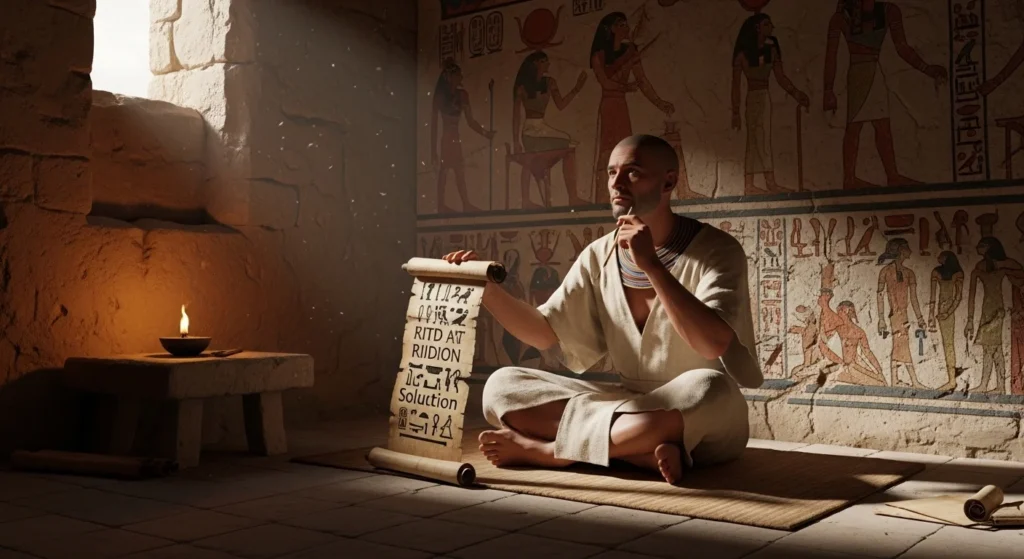
💡 Did You Know?
Ancient Greeks believed riddles sharpened the intellect and were used in education to teach logic, ethics, and storytelling.
The earliest recorded riddle dates back over 4,000 years to Sumerian clay tablets, proving that curiosity is truly timeless.
🎯 Riddle of the Day
I speak without a mouth, yet all ears listen;
I vanish without touch, yet remain in history’s vision.
Can you guess the answer? Comment below!
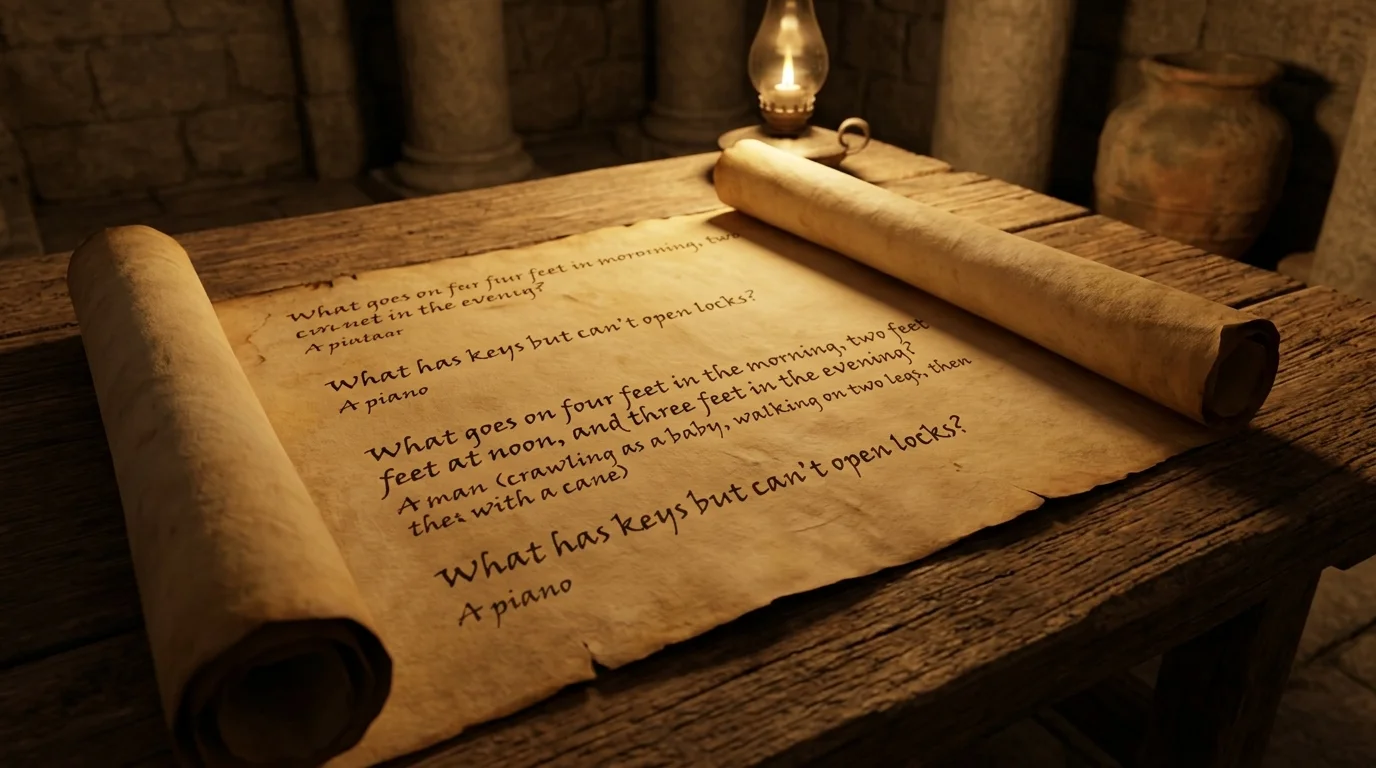
🏛️ Antiquity Riddles With Answers
- 👉 I rise without wings and fall without feet—what am I? — Time
- 👉 I speak without a mouth and echo through ages—what am I? — History
- 👉 I am carved but not alive, yet I tell stories—what am I? — Statue
- 👉 I exist in ruins but carry memories—what am I? — Ancient city
- 👉 I am older than memory but still studied today—what am I? — Antiquity
- 👉 I can be broken but never erased—what am I? — Record
- 👉 I am written but not always read—what am I? — Ancient text
- 👉 I survive time but not destruction—what am I? — Artifact
- 👉 I guide the past into the present—what am I? — History
- 👉 I am found in dust but hold knowledge—what am I? — Relic
🧩 Ancient Riddles With Answers
- 👉 What walks on four legs in the morning, two at noon, and three in the evening? — Human
- 👉 I am alive without breath—what am I? — Fish
- 👉 I cry without eyes—what am I? — Wind
- 👉 I devour all things—what am I? — Time
- 👉 I cannot be seen but can be felt everywhere—what am I? — Air
- 👉 I am always coming but never arrive—what am I? — Tomorrow
- 👉 I am full of holes but hold knowledge—what am I? — Book
- 👉 I can be broken but never held—what am I? — Promise
- 👉 I speak without voice—what am I? — Echo
- 👉 I am born in silence and die in noise—what am I? — Thought
🧠 Antiquity Riddles for Adults
- 👉 I survive centuries but lose nothing—what am I? — History
- 👉 I am studied to understand forgotten worlds—what am I? — Archaeology
- 👉 I connect modern minds to ancient ones—what am I? — Literature
- 👉 I reveal civilizations through fragments—what am I? — Artifact
- 👉 I exist in stone, clay, and memory—what am I? — Antiquity
- 👉 I am truth buried under time—what am I? — Past
- 👉 I speak through ruins and remains—what am I? — Ancient world
- 👉 I require interpretation, not sight—what am I? — Historical text
- 👉 I am wisdom preserved across ages—what am I? — Knowledge
- 👉 I am never new but always relevant—what am I? — Classics
📜 Classic Riddles
- 👉 I have cities but no houses—what am I? — Map
- 👉 I have keys but no locks—what am I? — Piano
- 👉 I run but never walk—what am I? — River
- 👉 I can be cracked, made, told, and played—what am I? — Joke
- 👉 I have a face but no eyes—what am I? — Clock
- 👉 I travel the world while staying in a corner—what am I? — Stamp
- 👉 I am always in front but cannot be seen—what am I? — Future
- 👉 I grow shorter as I grow older—what am I? — Candle
- 👉 I speak all languages but have no tongue—what am I? — Book
- 👉 I can fill a room but take no space—what am I? — Light
🏺 Old Riddles for Adults
- 👉 I am older than kingdoms but still studied—what am I? — History
- 👉 I carry voices of ancient thinkers—what am I? — Philosophy
- 👉 I survive wars but not forgetting—what am I? — Record
- 👉 I am carved into memory and stone—what am I? — Monument
- 👉 I connect generations through time—what am I? — Tradition
- 👉 I am wisdom passed without technology—what am I? — Oral history
- 👉 I reveal truth through interpretation—what am I? — Ancient text
- 👉 I exist where time slows down—what am I? — Antiquity
- 👉 I am knowledge hidden in ruins—what am I? — Archaeology find
- 👉 I am the voice of civilizations long gone—what am I? — History
📚 Literature Riddles With Answers
- 👉 I tell stories without speaking—what am I? — Book
- 👉 I live in pages but grow in minds—what am I? — Literature
- 👉 I can inspire revolutions or peace—what am I? — Writing
- 👉 I contain worlds inside words—what am I? — Novel
- 👉 I am read but not alive—what am I? — Text
- 👉 I preserve thoughts across time—what am I? — Manuscript
- 👉 I am a mirror of human imagination—what am I? — Literature
- 👉 I carry voices of authors long gone—what am I? — Classic book
- 👉 I can be fiction or truth—what am I? — Literature
- 👉 I am timeless yet always evolving—what am I? — Story
🏛️ Oldest Riddles
- 👉 I am found in ancient myths and caves—what am I? — Riddle
- 👉 I was spoken before writing existed—what am I? — Oral riddle
- 👉 I challenge kings and travelers—what am I? — Sphinx riddle
- 👉 I survive through storytelling alone—what am I? — Ancient puzzle
- 👉 I test wisdom instead of strength—what am I? — Riddle
- 👉 I am older than written language—what am I? — Spoken puzzle
- 👉 I travel through generations unchanged—what am I? — Classic riddle
- 👉 I confuse those who rush to answer—what am I? — Trick question
- 👉 I reward those who think deeply—what am I? — Wisdom test
- 👉 I am humanity’s oldest game of mind—what am I? — Riddle tradition
🧠 History Riddles for Adults
- 👉 I record victories and failures alike—what am I? — History
- 👉 I am written by winners and questioned by thinkers—what am I? — History
- 👉 I connect past events into meaning—what am I? — Timeline
- 👉 I am studied to avoid repeating mistakes—what am I? — History
- 👉 I shape identity of civilizations—what am I? — Culture
- 👉 I am evidence left behind by time—what am I? — Artifact
- 👉 I tell stories without emotion but with truth—what am I? — Record
- 👉 I am always changing in interpretation—what am I? — History
- 👉 I am taught in schools worldwide—what am I? — History subject
- 👉 I am never forgotten but often reinterpreted—what am I? — Past
🎯 Riddle of the Day
- 👉 I am older than memory, speak without words, and live forever in ruins—what am I?
🏺 Ancient Artifact Mysteries
I have no legs but I carry kings 👉 Throne
I shine like the sun but fall from the sky 👉 Gold coin
I am carved yet never speak 👉 Statue
I mark the dead but guard their tale 👉 Tombstone
I fly without wings yet deliver messages 👉 Scroll
I hold knowledge but cannot read 👉 Tablet
I am old yet treasured, hidden in vaults 👉 Relic
I have pages but no story begins 👉 Codex
I protect secrets in a fortress of clay 👉 Archive jar
I age like wine yet tell no lies 👉 Manuscript
🏛️ Mythical Riddles from Antiquity
I walk on four in youth, two in adulthood, and three in old age 👉 Human
I live in the underworld yet guide the lost 👉 Psychopomp
I guard treasures yet vanish in water 👉 Nymph
I breathe fire yet sleep in caves 👉 Dragon
I am winged yet make no sound 👉 Pegasus
I whisper prophecies yet have no mouth 👉 Oracle
I carry souls yet never tire 👉 Boat of Charon
I am born from foam yet rule the sea 👉 Aphrodite
I bind heroes with riddles and tales 👉 Sphinx
I am stone but speak wisdom to the bold 👉 Obelisk
🗿 Lost Civilization Puzzles
I vanish with sand but leave footprints of time 👉 Desert ruin
I hold walls yet no roof stands above 👉 Temple
I am written yet not read by many 👉 Hieroglyph
I fly through history yet touch no sky 👉 Legend
I am hidden beneath layers yet tell stories 👉 Fossil
I am built by hands now turned to dust 👉 Pyramid
I am guarded by myths yet found by explorers 👉 Tomb
I am painted but never move 👉 Fresco
I rise from ashes yet belong to no age 👉 Artifact
I echo the past but cannot speak today 👉 Ruins
⚱️ Fun with Ancient Symbols
I am drawn in circles yet never spin 👉 Seal
I tell time without a tick 👉 Sundial
I speak in pictures yet never utter words 👉 Hieroglyph
I guard the heavens yet lie on the earth 👉 Zodiac
I mark graves yet shine in stars 👉 Constellation
I am a key yet lock nothing 👉 Sigil
I move with the wind but stay in place 👉 Banner
I am carved in stone yet vanish in sunlight 👉 Inscription
I hold power yet fit in a hand 👉 Amulet
I protect the living yet honor the dead 👉 Talisman
🏹 Legendary Hero Riddles
I wield no sword but strike with wisdom 👉 Strategist
I chase monsters yet fear shadows 👉 Hero
I cross rivers yet touch no water 👉 Bridge of legend
I am famed for strength but not alive 👉 Statue of hero
I journey far yet never leave home 👉 Epic tale
I face trials yet never sleep 👉 Gladiator
I lead armies yet carry no banner 👉 General
I defeat foes without a fight 👉 Trickster
I am remembered yet never old 👉 Myth
I am sung in stories yet never heard 👉 Ballad
🏺 Riddles from Ancient Daily Life
I carry water yet am not alive 👉 Amphora
I cook without fire yet feed many 👉 Oven pot
I wear no clothes yet keep you warm 👉 Blanket of wool
I sit at tables yet have no legs 👉 Mat
I shine in lamps yet consume no oil 👉 Mirror reflection
I travel without moving 👉 Letter
I speak without a voice 👉 Inscription
I mark celebrations yet never age 👉 Calendar
I weave threads yet never tire 👉 Loom
I wash hands yet hold no water 👉 Basin
⚖️ Philosophy & Wisdom Puzzles
I am sought by many yet found by few 👉 Truth
I question without asking 👉 Philosophy
I am heavy yet lift the mind 👉 Knowledge
I am silent yet speak louder than words 👉 Wisdom
I am seen in choices yet invisible 👉 Morality
I travel with time yet stay in place 👉 Reflection
I am shared yet never divided 👉 Idea
I am chased yet never caught 👉 Enlightenment
I teach without speaking 👉 Example
I shine brightest in darkness 👉 Insight
🏺 Archaeological Discovery Riddles
I sleep beneath soil yet reveal the past 👉 Artifact
I have layers yet no clothes 👉 Stratigraphy
I am dug up yet never complain 👉 Fossil
I travel in books yet sit in museums 👉 Relic
I tell stories without a tongue 👉 Petroglyph
I am broken yet whole in meaning 👉 Shard
I am hidden but inspire the curious 👉 Tomb treasure
I whisper secrets yet hold no lips 👉 Inscription
I last centuries yet fade in memory 👉 Manuscript fragment
I am ancient yet spark imagination 👉 Unearthed relic
⚱️ Treasure & Mystery Riddles
I glitter in darkness yet am not alive 👉 Gemstone
I am buried yet sought by many 👉 Treasure
I guard secrets yet am not a lock 👉 Chest
I am old yet bring excitement anew 👉 Coin hoard
I am chased yet cannot run 👉 Map
I shine without fire 👉 Gold
I am hidden yet reveal joy 👉 Scroll of wisdom
I survive floods yet crumble in hands 👉 Ancient manuscript
I sparkle yet am not star 👉 Jewel
I am a clue to history yet silent 👉 Artifact